Chemistry Faculty and Staff Updates
The following Department of Chemistry faculty and staff members shared these recent personal and professional updates:
Spencer Brucks
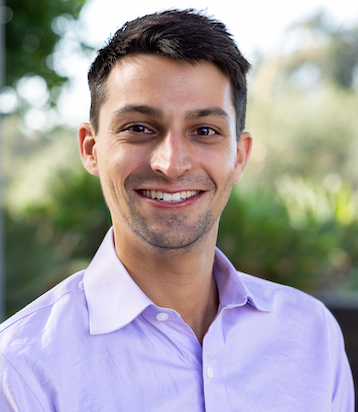
Our research group has a milestone year in 2025! Our first peer-reviewed paper was published in Macromolecules and secured our group’s first external grant from the American Chemical Society Petroleum Research Fund to support our ongoing polymer degradation work. In our paper, we showed that polynorbornenes linked together by cis-alkenes were more susceptible to mechanical degradation than the same polymer linked by trans-alkenes. Ethan Flanagan ’23 started this project when we were first building the lab and learning how to polymerize norbornene and characterize mechanical degradation. Aech Loar ’24 continued this work looking into how to optimize polymerization conditions. Then Britney Baez ’25 and Grey Karis-Sconyers ’26 got the project over the finish line by heroically building a library of dozens of polymers and hundreds of gel permeation chromatograms.
The research group traveled to ACS San Diego in March 2025 and together accounted for five research poster presentations. In addition, Britney gave the group’s first oral presentation at a national conference. It was thrilling to see so many Mudders sharing their research at the most prominent chemistry conference.
Over the summer, Grey, Adrianne Baik ’27 and Kinsey Myrick ’28 each led distinct polymer chemistry projects with a significant focus on green chemistry. In addition to sharing their research with the Mudd community, they also became the first group members to travel to UC Irvine and present at the SoCal Undergraduate Chemistry Research Symposium. We enjoyed networking with other regional chemists and getting a campus tour from UC Irvine graduate student and HMC alum Connor Seto ’24. We are looking forward to wrapping up some of our other most long-running projects and making new discoveries about polymers and probiotics as the group approaches four years old.
Lelia N. Hawkins
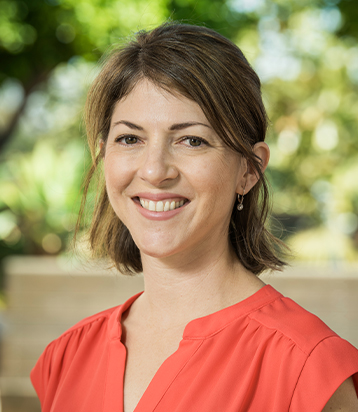
Twenty-twenty-five was a year of adventure. I have continued leading the Hixon Center for Climate and the Environment, adding yet another faculty member to the program (math/climate) and a designing a new major, our fourth at the College. In my role, I was fortunate to be invited to trial a new study abroad program, Sea Education Association’s oceanography “at sea” with our study abroad director, Sarah Repetto. Sarah and I traveled to Tahiti, FP, where we spent five days on a research sail boat experiencing oceanography as it’s meant to be. Students who opt for this program will have a life-changing experience, just as we did. Last fall I brought a new course, Climate Wayfinding, to our campus. It’s a small-credit, large impact guided exploration for students’ own emotions, strengths and aspirations as they relate to the grand challenge of climate change. It was a big hit, and I hope to reprise the course soon. But first, sabbatical! Next year I will be busy diving back into my scholarship, completing unfinished manuscripts and, if funded, advancing my air quality research with newly available satellite observations. My family continues to enjoy living in Claremont and, despite my best efforts, my son continues to get older. He’ll start middle school next year.
Adam Johnson
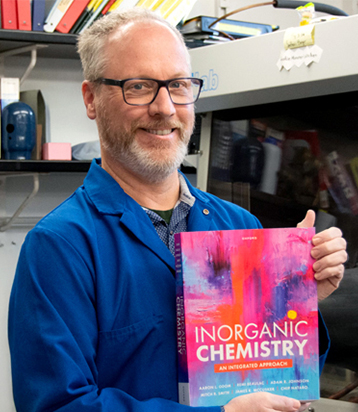
The last two years of being associate chair have prepared me well for taking on the important chair role, which I started in July. Much of my work in involves mentoring the other members of the department, a task that gives me a good deal of professional and personal satisfaction. I am fortunate to have a strong team of “assistant chairs” who help me with some of the day-to-day operations, curriculum scheduling, and helping me navigate and think deeply about the future of the department.
Last spring (2025), I taught inorganic chemistry with laboratory and I continued to refine my use of specifications grading. I presented this at Pacifichem in December. “Specs” grading is about making sure that students learn skills rather than earning points, and it has been working well. In the fall, I taught a section of the first year laboratory.
Over approximately 18 months, a former student Britney Baez ’25 worked to write a comprehensive review article on first-row transition metal amination chemistry. We were invited to submit this to the premier journal in the field, and I am happy to share that it was published in Organometallics in 2025. I am very excited to share that the textbook project that I have been involved in for almost eight years has finally reached completion. Inorganic Chemistry, an Integrated Approach is now available from Oxford University Press.
Both of my kids are in their last year of college, in fact, I made my last tuition payment recently. Nat will be attending the University of Alabama for graduate work in geology (Re-Os geochronology) while August’s plans are less certain for now. Crista and I continue to bike, cook and take care of our cat Moofie and our new dog Indy.
Sarah Kavassalis
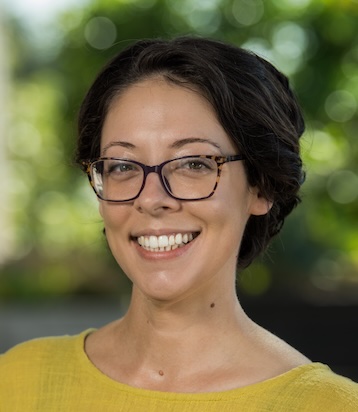
For the first time, first-year students chose Harvey Mudd for our new joint chemistry and climate major! Several alums from my group are now graduate students working in this area. In 2025, I was invited to share our work at California State University Long Beach, The Claremont Colleges Library and at the American Chemical Society. My research group and I published the first dataset from our new AmeriFlux site at the Bernard Field Station, and collaborators in Claremont and beyond are already making use of it. With Hixon colleague Lynn Kirabo (CS and climate) and some wonderful friends in the math and CS departments, we launched the Data Science and Social Impact (DSSI) Lab with an Innovation Accelerator grant, linking data science to community benefit across disciplines and debuted the Driving the Impact of Data Science (DIoDS) Conference: From Data to Doing on campus in February.
Maduka Ogba
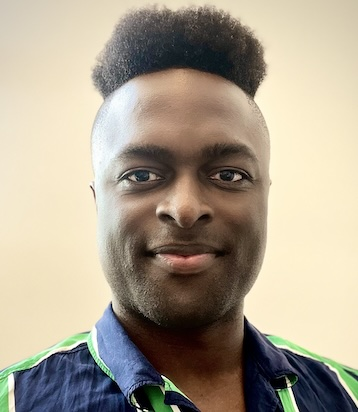
In 2025, the Ogba Research Group continued to advance the field of sustainable catalysis with significant support from new funding. Professor Ogba was awarded a $223,656 NSF LEAPS-MPS grant to investigate “carbones” as metal-free catalysts, a project that also funds research rotations for first-year students to foster early STEM identity. Additionally, the group received a $70,000 grant from the American Chemical Society Petroleum Research Fund to explore carbon recycling via CO₂ reductive functionalization. On the publication front, the lab produced two papers in organic and biomolecular chemistry and trends in chemistry, shedding light on the reactivity of zerovalent carbon species. These grants and publications featured extensive contributions from student researchers, including Max Schernikau ’27, Aresema Ata ’28, Nora Nickolov ’28, Nata Velarde-Alvarez ’28 and Zaan Saeed ’28.
Hal Van Ryswyk
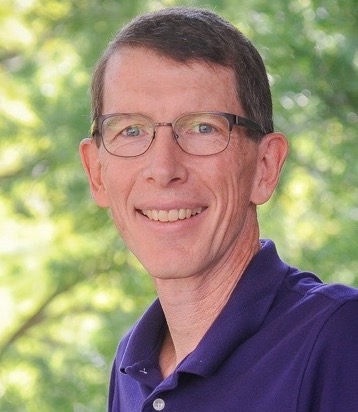
The past academic year and summer were very productive in my lab. Two HMC chemistry seniors were joined by an HMC physics major and a Pomona chemistry major to undertake senior theses. All told, the lab presented four posters at the American Chemical Society national meeting in San Diego, one at the American Physical Society national meeting in Anaheim and one at the Materials Research Society national meeting in Seattle.
We now teach the first course in analytical chemistry in the spring, serving chemistry, chemistry/biology and chemistry/climate majors from sophomores to seniors. As a chemistry fundamentals course in each of these majors, the course has become one of the largest in the department. Yes, we still run the aquarium project in lab, and yes, last year all the fish survived, yet again! (Fish naming system: U.S. presidents who died in office.)
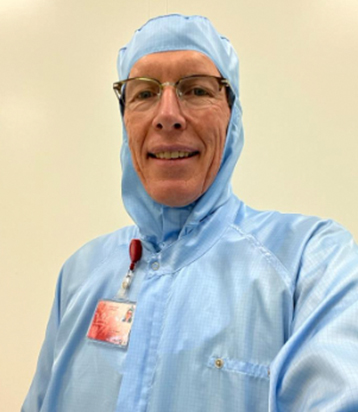
Charlotte and I spent the fall semester of 2025 on leave at the University of Groningen in the Netherlands, where I worked in Maria Antonietta Loi’s lab. After spending fifteen years making solar cells of various types on the bench top at Mudd, it was eye opening, fascinating and deeply fulfilling to work in a physics lab where the entire process for solar cell creation and testing, beginning to end, is done in a single inert atmosphere enclosure within a class 7 clean room. Now that I’ve seen what €50M of equipment can do, I have a better idea of where we at Mudd can add value to the process. It was also fun to tour the Netherlands. Charlotte and I can both trace our family trees back to the Netherlands, and with a Dutch surname and body type typical of the Dutch, it was easy to become fully immersed—I rode a bike 10 km every day, rain (a lot) or shine, from our flat in the inner city, along the canals, over two bridges and through a park to reach the university. It was simply beautiful. It turns out that I can be quite funny when I speak Dutch. One gem guaranteed to break the ice and make everyone laugh is, Ons Nederlands is slechter dan een fiets zonder banden (Our Dutch is worse than a bike without tires.) You really must get a feel for Dutch humor! Please drop me a line and let me know what’s new with you. Never hesitate to reach out, or, if you’re in Southern California, stop by and say hello.
David A. Vosburg
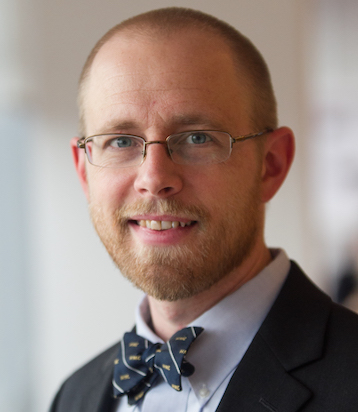
A great surprise this year was receiving the (second ever) Teaching Green Fellowship from the American Chemical Society Green Chemistry Institute. The award supported our green chemistry work in Summer 2025 and travel for Nora O’Connor ’26 and me to the Green Chemistry and Engineering Conference in Pittsburgh in June. Nora gave a poster presentation, and I gave four(!) talks at the conference. Two other honors this year for Nora, who’s doing her thesis in my group, are an Astronaut Scholarship and an American Chemical Society Organic Division Summer Undergraduate Research Fellowship.
Twenty-twenty-five was a great year for trying out new lab experiments. We made some greener (less toxic) adjustments to several organic lab experiments: solid-phase peptide synthesis, pyridine cyclization, ferrocene chromatography, plant perfume synthesis, moclobemide synthesis and a new polymerization/functionalization. Half of these experiments were new and co-developed with Spencer Brucks, including the pyridine cyclization experiment that was published this year in the Journal of Chemical Education: “A pyridine cyclization cascade with and without dichloromethane.” Three of the primary contributors to this project were Nora O’Connor ’26, Tanner Gasteazoro ’25 and Luke Stemple ’24.
A key pivot in the pyridine cyclization project was switching the solvent from dichloromethane (toxic and subject to new exposure regulations) to greener solvents. This aligned with both our departmental decision to discontinue using dichloromethane (via donations to Pomona, Scripps and Pitzer) and another article from my group in the Journal of Chemical Education with key contributions then-first-year Angela Milo ’28 and involving Kyle Grice ’05, who’s an inorganic chemist at DePaul: “Alternatives to dichloromethane for teaching laboratories.” This paper came out in May 2025 and has already been downloaded over 18,000 times.
In 2025 we also published work from Eleanor Bentley ’23 and Oriole Song ’25 on “One-pot synthesis and biological evaluation of N-fused imidazoles as antibacterial agents and bacterial topoisomerase inhibitors.” This was a collaboration with a microbiology group at Western University of Health Sciences and also involved crystallographic work by Adam Johnson and Veronica Show ’22.
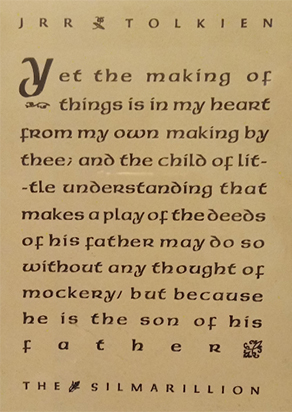
While I didn’t teach Writ 1 this year, CS professorsTim Randolph and Qimin Yang still invited me to dress up as Shandalf the Beige and read JRR Tolkien’s Ainulindalë to their eager students. If you visit my HMC office, you’ll see an increasing collection of Lord of the Rings LEGO sets arranged thematically around the room as well as an awesome Silmarillion quote that Mark Cyffka ’10 produced when he was in Professor Jeff Groves’ hand-press printing class (right).
On the family front, our son Nate is now a junior at Williams and will be studying abroad in Budapest in the spring. Isabella and Diego are both high school juniors and regularly drive our Nissan Leaf. My wife, Kate, has taken up painting during a sabbatical break. I turned 50 in 2025, and she’s next!
Kim Young
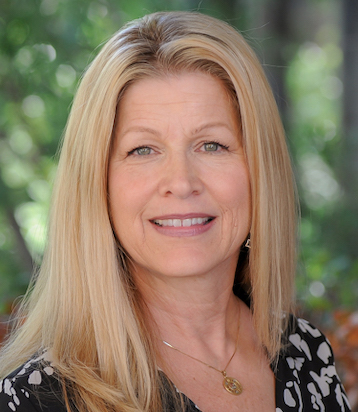
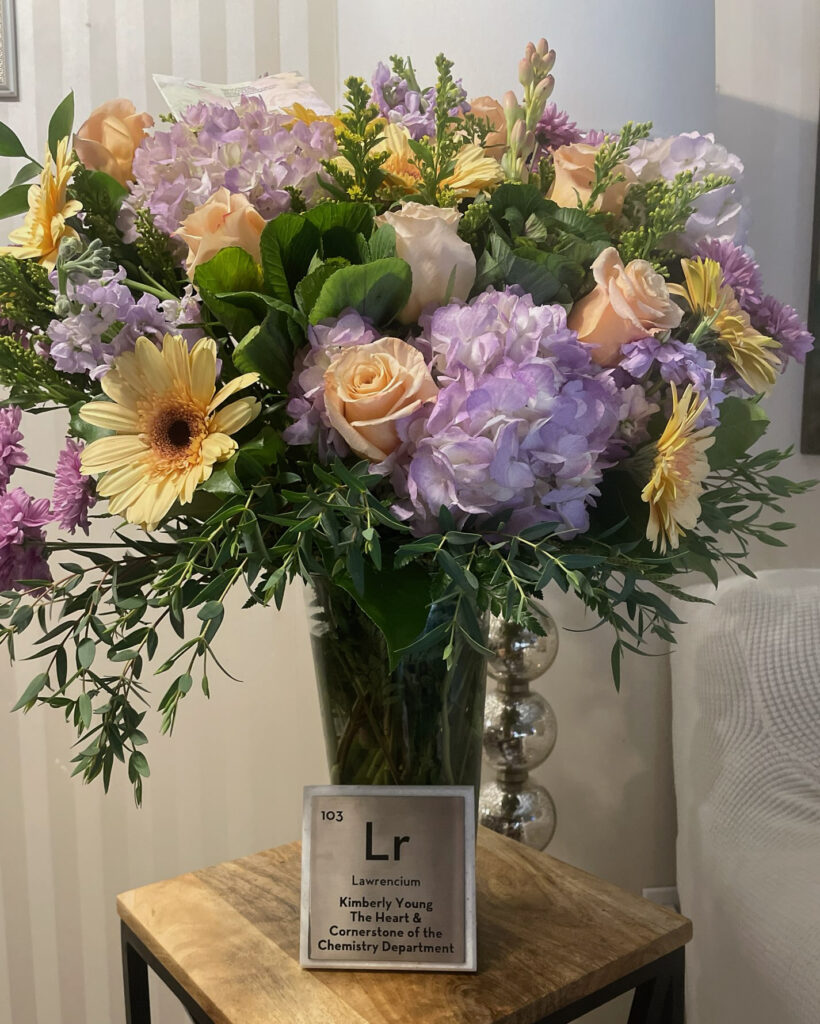
In 2025, the department celebrated my 35 years with the College in big style. There was a joyous dinner, and I was gifted with an element on the periodic table and the most gorgeous flowers. I can’t believe how lucky I am to have landed the very best job in the very best department at the very best college.
I’ve been double-blessed, as both of my beautiful daughters are having babies this year (2026). This summer and the following fall will be so busy with the fresh sounds of sweetness as we welcome these additions to our family tree. Both of my granddaughters will be four this year. It is so fun to watch them discover art and music and, of course, shopping with Grammie.