The Beckman Scholars Program Mentors
Faculty Mentors of The Beckman Scholars Program (BSP) at Harvey Mudd
Note: Drs. Dato, Schulz, and Vosburg are not accepting Scholars through the Beckman Scholar Program this year.
Dr. Spencer D. Brucks (Chemistry)
Dr. Spencer D. Brucks
Research Focus: Organic Materials & Chemical Biology
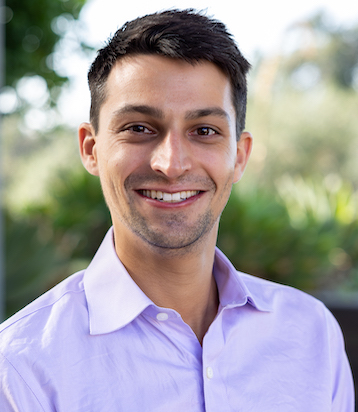
In the Brucks group, you will explore the creative intersection where synthetic organic chemistry meets biological application. Dr. Brucks employs a philosophy of scaffolded independence. You will start with foundational training and graduate to full ownership of your own project, including experimental planning, troubleshooting, and data analysis. You will lead your own sub-aim or project, ensuring you develop the critical thinking skills of an independent scientist.
Beyond the bench, Dr. Brucks is a visible leader in campus inclusivity, having co-organized HMC’s first campus-wide Pride events and facilitated departmental anti-racist book clubs. The lab culture is fiercely supportive; Dr. Brucks prioritizes investing in you as a whole person with an open-door policy (his office adjoins the lab). You will also gain professional polish through weekly group meetings designed to prepare you for graduate-level research and presentations at national venues like the American Chemical Society (ACS) meeting.
Dr. Albert Dato (Engineering)
Dr. Albert Dato
Research Focus: Synthesis of Advanced Materials (Energy & Environment)
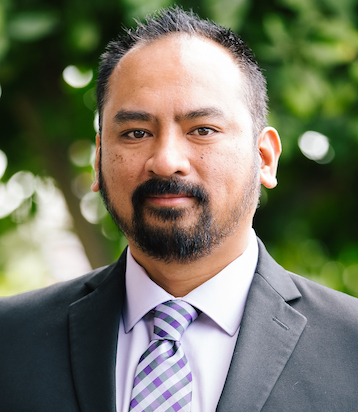
In the Energy and Nanomaterials Lab, research is driven by a mission to solve critical environmental challenges. As a Scholar, you will focus on synthesizing a special form of graphene to create advanced nanocomposites. Your work will have tangible applications: creating superhydrophobic coatings for atmospheric water harvesting and developing membranes for carbon dioxide capture.
Dr. Dato will draw on his extensive background in the semiconductor industry and as a Visiting Scientist at Lawrence Livermore National Laboratory to prepare you for both academic and industrial careers. You will drive every aspect of your project, from synthesis to data analysis using cutting edge microscopic and spectroscopic tools. The lab culture is built on community and success; the group thrives on near-peer mentorship and team bonding activities like escape rooms and social dinners.
Dr. Lisette de Pillis (Mathematics)
Dr. Lisette de Pillis
Research Focus: Mathematical Modeling of Within-Host Diseases & Women’s Health
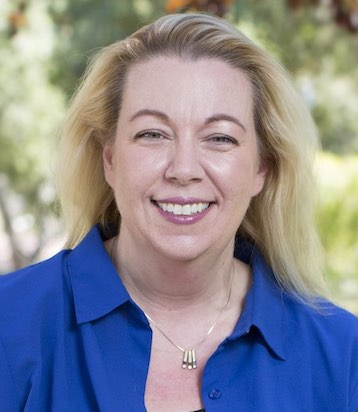
In the de Pillis group, you will use the power of mathematics and scientific computing to tackle urgent medical questions. You will choose from projects exploring women’s health (predicting the effects of hormonal treatments) or cancer immunology (modeling the interplay between tumor growth, the immune system, and targeted therapies). You will learn to create virtual clinical trials and conduct in silico experiments using public data sets to validate your models.
This mentorship is designed to move you from working alongside the professor to becoming an independent researcher. Dr. de Pillis emphasizes that Scholars are never assigned grunt work; instead, you will engage with open problems from formulation to solution. A major focus of the lab is communication, training you to write and present at a professional level, with the explicit goal of producing a publication-quality paper. The environment is intentionally structured to be open and inclusive, prioritizing clear communication and connecting Scholars to wider support networks across the Claremont Colleges.
Dr. Colm Healy (Chemistry)
Dr. Colm Healy
Research Focus: Hybrid Materials for Energy Devices
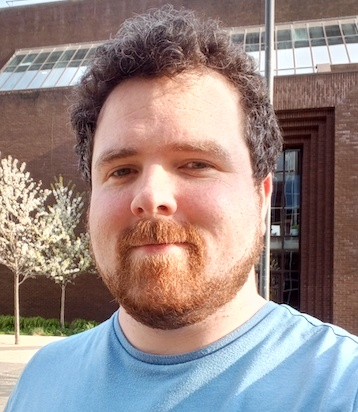
In the Healy Lab, research is treated as a personalized educational journey. You will focus on developing novel organic-inorganic hybrid materials, substances that blend the properties of different chemical worlds for potential use in energy applications. The experience is built on a philosophy of structured autonomy. During your first summer, you will receive hands-on training in synthesis and characterization; as you progress, you will transition from learning techniques to developing your own hypotheses and designing your own synthetic targets for the academic year and beyond.
Dr. Healy brings a unique background in sciencecommunication to his mentorship, making this an ideal home for Scholars interested in science policy, education, or outreach. The support structure is intentional and high-touch, featuring twice-daily check-ins using SMART goals to ensure you are never lost. The lab culture is defined by cultural humility, where students actively collaborate to write and update the lab’s expectations, ensuring an inclusive environment that welcomes neurodivergent, first-generation, and immigrant student perspectives.
Dr. Mark Ilton (Physics)
Dr. Mark Ilton
Research Focus: Soft Matter Physics & Biophysics
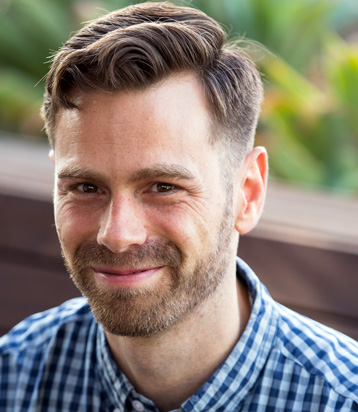
In Dr. Ilton’s Soft Matter Physics group, you will use physics to unlock the secrets of biological efficiency. The Scholar’s project will challenge existing biomechanical models of how tendons work, moving beyond simple “spring and dashpot” theories to complex simulations of viscoelasticity. Your goal? To determine if our current understanding of walking and running gaits needs to be rewritten to account for how tendons actually store and release energy.
This fellowship offers a robust theory-to-practice experience. You will spend your first summer building and validating numerical gait models (coding), and then transition during the academic year to hands-on mechanical testing of real tendon specimens. Dr. Ilton runs his lab with a philosophy of scaffolded independence and strong community building: expect daily scrum-style check-ins to celebrate small wins, collaborative expectation setting, and the famous weekly Fun Fridays (ranging from hikes to cooperative games) to ensure the team thrives together.
Dr. Maduka Ogba (Chemistry)
Dr. Maduka Ogba
Research Focus: Reaction Mechanisms & Catalysis
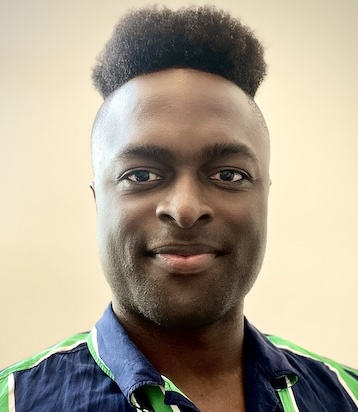
In the Ogba Lab, you won’t just learn chemistry; you will master the digital tools essential for the modern scientific workforce. Dr. Ogba’s mentorship is designed to equip you with high-demand skills in molecular modeling/simulations, big data analytics, and machine learning. Your research will focus on the cutting edge of green chemistry: using quantum chemistry to investigate how catalysts can be used to upcycle environmental waste into valuable chemicals.
The experience is structured for success. You will start with a custom training curriculum to master the computational tools before diving into your own independent project. Dr. Ogba is known for his open-door mentorship style and a commitment to transparency. He provides a clear research syllabus so you always know what is expected. This structured support yields results: Dr. Ogba has successfully guided multiple students through research projects that have led to co-authored publications and have helped guide students to secure prestigious graduate fellowships.
Dr. Danae Schulz (Biology)
Dr. Danae Schulz
Research Focus: Molecular Parasitology
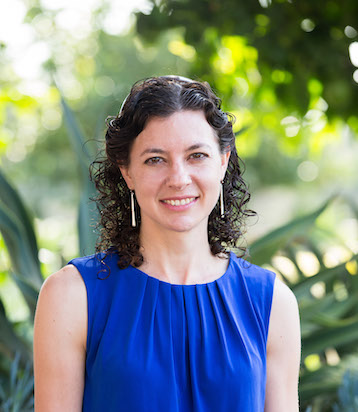
In the Schulz Lab, you will engineer biological systems using CRISPR-Cas9 to uncover how African trypanosomes (parasites) survive and adapt. Because there are no graduate students or postdocs in the lab, you will take full intellectual ownership of your project, mastering advanced genomic and cellular profiling tools. The goal is explicit: projects are designed for publication in peer-reviewed journals, and 16 undergraduates have already become co-authors.
Dr. Schulz offers a high-touch mentorship style, with daily morning meetings during the summer to ensure you are supported every step of the way. You will also have unique leadership opportunities, such as mentoring high school students through the Upward Bound program (part of Dr. Schulz’s NSF CAREER grant) and presenting at prestigious venues like the Molecular Parasitology Meeting in Woods Hole, MA. The lab culture is built on inclusivity and collaboration; students and Dr. Schulz co-create the lab’s community guidelines at the start of every session to ensure a safe, welcoming environment for everyone.
Dr. Dave Vosburg (Chemistry)
Dr. David A. Vosburg
Research Focus: Organic Synthesis & Green Chemistry
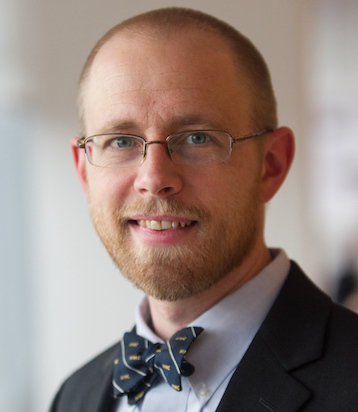
In the Vosburg Lab, you will master the art of molecular architecture with an eco-conscious twist. As a Scholar, you will likely tackle skeletal editing, a cutting-edge technique where you insert nitrogen and carbon atoms into molecular rings to create new, potentially life-saving compounds. This is a high-ownership experience; you will be treated like a senior thesis student from the start, learning advanced techniques like air-sensitive reaction handling, column chromatography, and multi-instrument spectroscopy.
Dr. Vosburg offers a unique bridge to industry and medicine, with active collaborations at Bristol Myers Squibb (BMS) and Western University of Health Sciences. His students frequently secure internships at BMS and present at major national conferences like the National Organic Symposium. The lab culture is deeply supportive and socially engaged, participating annually in the Empowering Women in Organic Chemistry (EWOC) conference and summer antiracist book clubs. With a track record of mentoring 88 undergraduates (including 9 NSF Graduate Fellows and 2 previous Beckman Scholars), Dr. Vosburg knows exactly how to prepare you for a PhD program.
Dr. Calden Wloka (Computer Science)
Dr. Calden Wloka
Research Focus: Visual Attention & Cognition
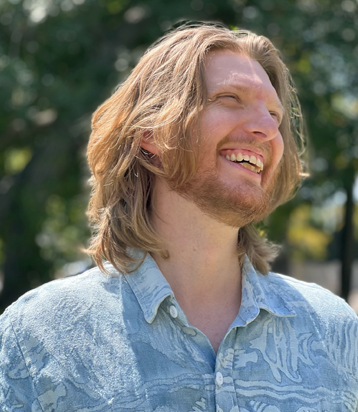
In the Lab for Cognition and Attention in Time and Space (Lab for CATS), you will explore the fascinating boundary between biological sight and artificial intelligence. As a Scholar, you will design and run psychophysical experiments, measuring how humans process visual information, to either identify novel properties of human vision or evaluate the robustness of artificial visual models. You will gain technical skills in Python, Git, and LaTeX, transitioning from guided experiment design to independent data gathering and analysis.
Dr. Wloka’s mentorship is rooted in demystifying academia; drawing on his own background growing up on a family farm, he explicitly teaches the unwritten rules of research to ensure no student feels out of place. The lab features a unique journal club structure where you won’t just read papers, you will roleplay as peer reviewers or popular science writers to understand scientific communication from every angle. The environment is collaborative and fun.
Dr. Bilin Zhuang (Chemistry)
Dr. Bilin Zhuang
Research Focus: Chemical Structures & Dynamics / Computational Chemistry
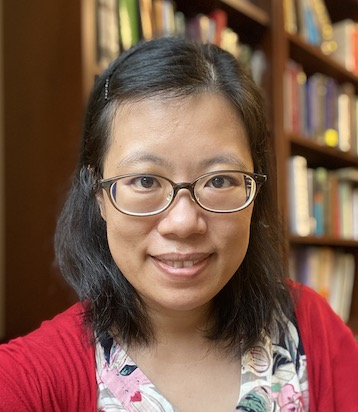
In the Zhuang Lab, research is an interdisciplinary playground. Because the work focuses on the theoretical modeling of complex solutions (like polymers), you can tailor your project to lean heavily into physics, chemistry, or computer science, depending on your career goals. You will gain high-level skills in simulation algorithms, coding, and high-performance computing to hypothesize and test the driving forces of molecular dynamics.
Dr. Zhuang’s mentorship is defined by customized scaffolding. You will begin with frequent (3–5x weekly) meetings to build a solid foundation before transitioning to independent research. She places a heavy emphasis on communication, guiding you through the art of scientific writing by drafting manuscript sections weekly. By your second summer, you will not only be presenting at major discipline-based national conferences, but also mentoring newer students in the group.