CS Colloquium: “How Python Tutor Became a Long-Lasting and Widely Used Academic Software Project,” Philip Guo
September 11, 2026 11 a.m.–12 p.m.
 Add to Calendar
Location
Galileo Hall, Pryne
240 Platt Blvd.
Claremont, CA 91711
Contact
Morgan McArdle
mmcardle@g.hmc.edu
909.607.0299
Details
“One Developer, Two Decades and Thirty Million Users Later: How Python Tutor Became a Long-Lasting and Widely Used Academic Software Project”
Since 2009, Philip Guo has been developing Python Tutor, a tool that lets users write code in a web browser and see what happens step-by-step as the computer runs it. The tool visualizes variables, objects, pointers, data structures and stack frames. These visuals help students to debug their homework, teachers to explain concepts and programmers to prepare for job interviews. Despite its name, this tool visualizes code written in Python, Java, C, C++ and JavaScript, which are five of the most popular languages used in both teaching and industry.
Throughout the past two decades, over 30 million students and teachers from over 180 countries have used Python Tutor to visualize over 500 million pieces of code. Guo will reflect upon the design decisions (and non-decisions) he made to turn an off-the-cuff prototype into one of the most widely used pieces of academic software. He will cover three eras of Python Tutor development:
- Act I - Inception, the unique conditions that birthed this idea as a grad student side project.
- Act II - Acceleration, sustaining a decade's worth of user growth as he began his career as a professor.
- Act III - Disruption, when Generative AI both threatens the health of this project and may also be what revitalizes it.
 About the Speaker
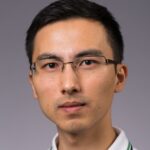
Philip Guo is a professor of cognitive science at UC San Diego. His research spans human-computer interaction, computing education and human-centered AI for education. He studies how people learn computer programming and data science, and he builds tools to help people better understand code and data. For instance, his Python Tutor educational tool has been used by 30 million students and teachers from over 180 countries throughout the past two decades. Python Tutor received a UIST Best Paper award and the ACM SIGCSE Test of Time award for long-term impact. His other lines of research have received 10-year long-term impact awards from VL/HCC and ISSTA, along with Best Paper awards at CHI, UIST, SIGCSE, VL/HCC, ICSE and ISSTA.
This event is for: faculty, staff, students
faculty, staff, studentsCommunity Connections events provide opportunities for HMC faculty, students and staff to cultivate community, foster open conversations and share important information as together we live out our mission and shape the future of the College.
Calendars
Kickstart your career journey by joining us each week for the OCS career and professional development series! From expert panels to hands-on workshops and presentations, each session dives into a new topic designed to help you build skills and confidence for your future.
We’re excited to launch Kudos Recognition Cards as part of our ongoing commitment to fostering a culture of appreciation and engagement at Harvey Mudd College. To celebrate the launch, we invite you to stop by the Kudos Kick-Off Event.
Learn about HMC’s approved study abroad programs and how to study abroad your junior year.
Kickstart your career journey by joining us each week for the OCS career and professional development series! From expert panels to hands-on workshops and presentations, each session dives into a new topic designed to help you build skills and confidence for your future.
Learn about HMC’s approved study abroad programs and how to study abroad your junior year.
This event is designed to help international students tailor their resumes to the U.S. format. We’ll explore key formatting tips and best practices to ensure your resume stands out to employers.
Kickstart your career journey by joining us each week for the OCS career and professional development series! From expert panels to hands-on workshops and presentations, each session dives into a new topic designed to help you build skills and confidence for your future.
The Cabinet is hosting informal coffee breaks in fall 2025 for students, faculty and staff. These coffee breaks will be attended by most of the Cabinet team and will provide an opportunity for the community to share ideas, express concerns and highlight successes.
All are welcome to stop by as schedules allow.
Learn about HMC’s approved study abroad programs and how to study abroad your junior year.
This learning community is for everyone, from those who are already experienced in community engagement to those who are curious about learning more about this high-impact educational practice. Faculty participants will discuss readings, meet with outside speakers, share ideas, and think collaboratively about implementing community engagement into the 5C students’ experience.
Learn about HMC’s approved study abroad programs and how to study abroad your junior year. Discussion of Sea Education Association (SEA) study abroad programs.
Introducing Hopper: On-Campus HPC Infrastructure for Computationally-Intensive Research
Paul Nerenberg, CMC; Jamie Haddock, HMC; Bilin Zhuang, HMC
In this presentation, we will introduce Hopper, a new NSF-funded high-performance computing (HPC) cluster shared by CMC and HMC. We will give an overview of Hopper’s hardware, some examples of current research use cases, and how it fits into the larger ecosystem of HPC resources available to HMC faculty.
Welcome to HMC’s Community Conversations for the fall 2025.
HMC Community Conversations* use conversation guides with a structured format to help people with different viewpoints and experiences build understanding. There will be 3–5 other people in a table group. It is not a debate, and the goal is not to change one another’s opinions. There are Conversation Agreements like “Listen and Be Curious” and “Show Respect and Suspend Judgement” that create the framework for diving into the questions. The questions are designed to draw out our personal experiences rather than opinions around the topic.
The overall purpose is to learn more about the experiences others have around the topic and build a sense of community.
Community Conversations will take place on Tuesdays from 11 a.m. to noon in Shanahan 1480; and each gathering will be on a separate topic. Gatherings will be in person only.
Kickstart your career journey by joining us each week for the OCS career and professional development series! From expert panels to hands-on workshops and presentations, each session dives into a new topic designed to help you build skills and confidence for your future.
Interested in health careers? Join our Pre-Health Community Lunches where we will meet once a month in the Hoch to connect casually, check in with each other, and share announcements. This semester’s lunches will be from 12-1pm on September 24, October 23, and December 4, at different locations in the Hoch. You do not need to attend all lunches, or for the full hour, just drop by when you can!
For this lunch on September 24, will be in the Aviation Room in the Hoch, and Dr. Jay Iinuma will be our guest speaker. Dr. Iinuma is a family physician with his own practice in Southern California!
This event is designed to help students prepare for the in-person career fair on October 1! Learn how to get ready for a career fair, how to make the most of the event, and how to talk to employers about work authorization.
Kickstart your career journey by joining us each week for the OCS career and professional development series! From expert panels to hands-on workshops and presentations, each session dives into a new topic designed to help you build skills and confidence for your future.
This faculty panel will explore “dangerous questions” from a variety of disciplines to understand and respond to challenges facing American universities. The discussion will address the erosion of knowledge and expertise, as well as political forces that may attempt to limit intellectual inquiry and creativity.
Ambereen Dadabhoy, asssociate professor of literature, “What Would Shakespeare Say?”
Anup Gampa, assistant professor of psychology, “Invasive Species: Blaming Dysregulated Plant Neighbors Is a ‘Settler Move’ to Innocence”
Rachel Mayeri, artist and professor of media studies, “What Can Art Do During a Fascist Takeover?”
David K. Seitz, associate professor of cultural geography, “Geography Against Immediacy”
Paul Steinberg, professor of political science and environmental policy, “Creative Politics as a Strategic Response to Authoritarianism”
David Wilson, assistant professor of music, “Sounding (Anti-)Authoritarian: A Few Vignettes”
The K-12 through college CS pipeline is full of barriers and those barriers prevent broader participation in the field. I’ll describe some of my research to try to identify or remove some of those barriers. I hope you will learn a bit more about CS education research and how you can advocate for policies and practices that can broaden participation in CS!
“We don’t want to live in a society in turmoil. In the U.S., 93 percent of people want to reduce divisiveness, and 86 percent believe it’s possible to disagree in a healthy way. Yet with increasing political and social fragmentation, many of us don’t know how to move past our differences. Civil rights scholar john a. powell presents an actionable path through ‘bridging’ that helps us communicate, coexist and imagine a new story for our shared future where we all belong.” (description courtesy of Othering and Belonging Institute)
The Office of Civic and Community Engagement (OCCE) will be hosting a guilt-free book club this fall semester on john a. powell’s book The Power of Bridging: How to Build a World Where We All Belong. Our first gathering is on Friday, Oct. 3.
Submit an Event
Use the Submit Events form to add Mudd community events to the calendar.