The Harvey Mudd College (HMC) Colloquium Program is an academic seminar series that brings together students, faculty, and visiting scholars to engage with cutting-edge ideas across a range of specialized fields. In partnership with Pomona College, the program fosters cross-campus collaboration by jointly hosting and coordinating speakers, enriching the intellectual community of both institutions.
Through this series, invited experts—including leading researchers, academics, and professionals—deliver lectures on current developments, emerging trends, and innovative research in their respective disciplines. The colloquium provides a platform for sharing knowledge, encouraging interdisciplinary dialogue, and exposing attendees to perspectives beyond their primary area of study.
Designed to complement the academic experience, the HMC Colloquium Program promotes critical thinking, scholarly exchange, and a deeper understanding of contemporary issues in science, engineering, and related fields.
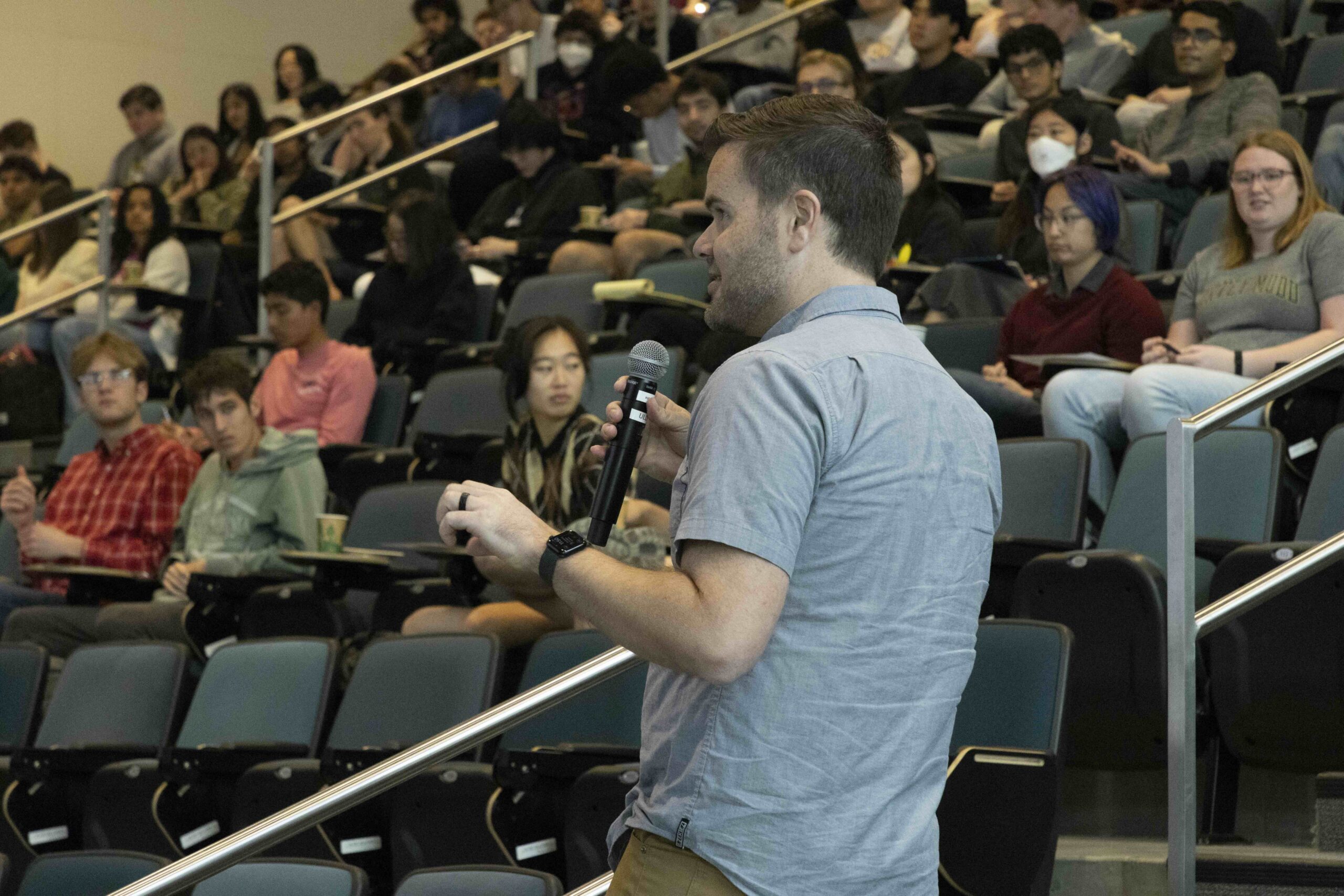
Gameplay Engineer and Technical Designer at Secret DoorTitle: Systems Thinking and the Art of GamesAbstract: At Harvey Mudd, students learn to become highly competent scientists and engineers- but beyond that they learn skills for analyzing the world around them, seeing things from different perspectives, and breaking down the underlying systems that exist in many diverse contexts. Although many students will go on to work in more traditional technical industries, the skills learned at Mudd can be applied to many different pursuits- art, policy, business, and more. Through the lens of video games, I’ll discuss ways that systems thinking can be brought to bear in fields we would traditionally consider less “technical”, such as the arts. I will go through broad problem spaces in the industry, as well as incredibly specific problems that I’ve tackled in my own work, discussing the ways a technically trained perspective can provide solutions to non-technical problems.
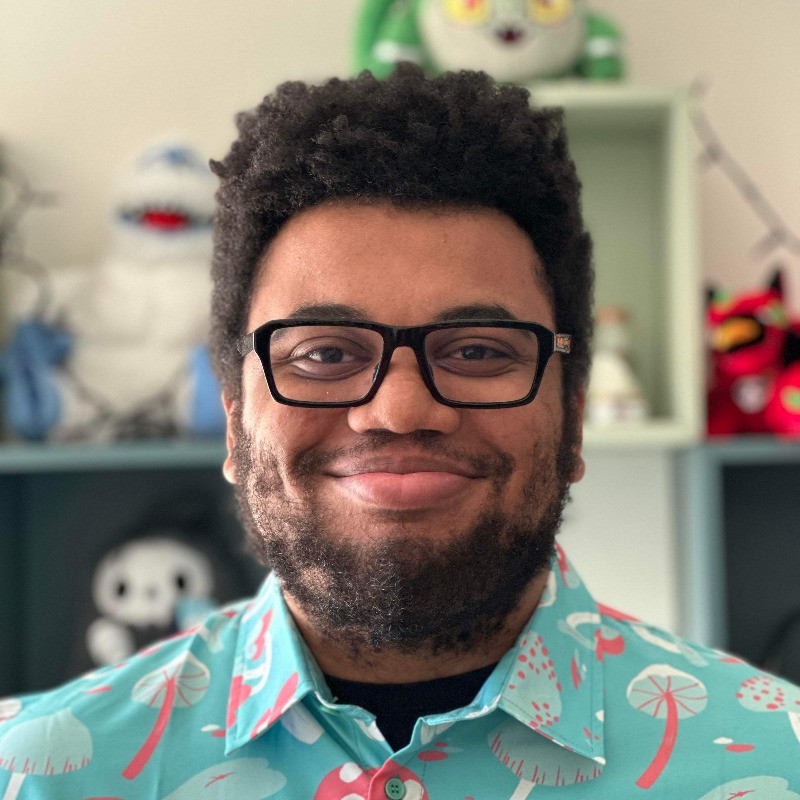
Clayton Stanford
Senior Research Scientist at GoogleTitle: A theoretical CS lens on language modelingAbstract: Multi-layer transformer models form the backbone of modern deep learning, yet little mathematical work details their benefits and deficiencies as compared with other architectures. This makes it difficult to answer practical and fundamental questions about the transformer architecture: What powers increase with model depth? Can alternative architectures improve efficiency without sacrificing expressivity? In this talk, I’ll present a communication-based theoretical framework for understanding the representational capabilities and limitations of multi-layer transformers. These results imply that parallelizability is a key property of the standard transformer that other architectures cannot easily replicate. I’ll contextualize these results within the broader conversation about the challenges of developing a principled theory of neural networks and share opinions on how theoretical computer science can remain relevant to their study.
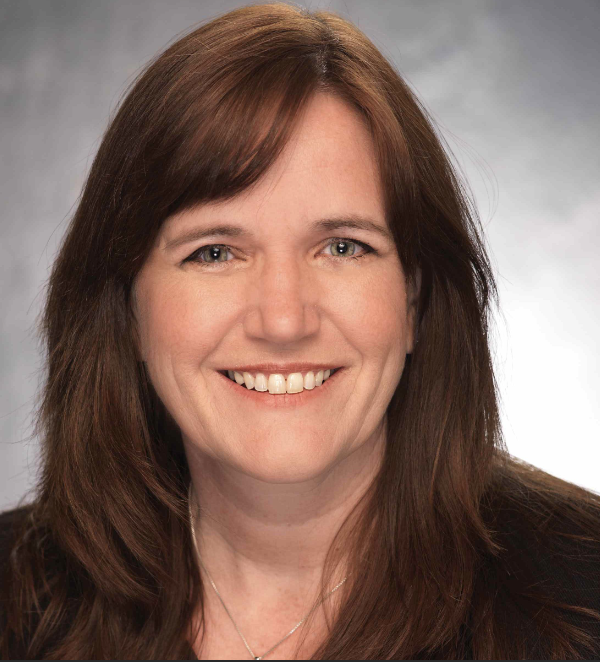
Dr. Jeanne Holm
Former Deputy Mayor of the City of Los Angeles; Distinguished Instructor, UCLATitle: Harnessing AI and Data for Equity and JusticeAbstract: With great power comes great responsibility. The quick adoption of artificial intelligence tools has put great power in our hands — to be more efficient, to accomplish more, and to open creative outlets. But we also have a growing responsibility to ensure that what we get from AI is accurate, data-driven, and is used to promote equity and justice rather than to exacerbate past biases. Dr. Jeanne Holm will give examples from her work with open data and AI from the White House building Data.gov, the World Bank in fighting the Ebola outbreak in Sierra Leone, and as the Deputy Mayor of the City of Los Angeles in closing the digital divide, creating more equitable city services, and building ShakeAlert – the first early earthquake warning system.
We would love to have you as a guest speaker during our Colloquium series! We’re happy to reimburse travel expenses and host you for lunch on campus. Please fill out this interest form so we can connect. Fill out this interest form so we can connect!