Second Harvey Mudd Student-built Airplane Takes Flight
September 23, 2026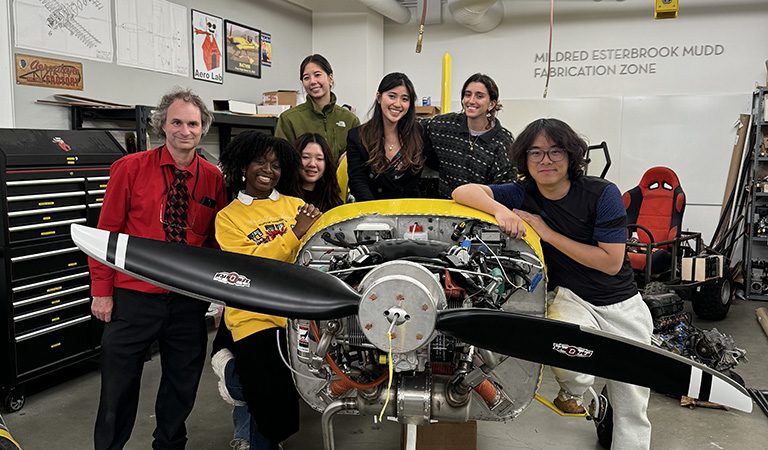
A second airplane built by Harvey Mudd students received its official airworthiness certificate this past summer and took to the skies, marking the culmination of a nine-year aeronautical experiential learning project led by engineering professor David Harris in which students from multiple class years built aircraft in the College’s basement engineering rooms and makerspace.
The first airplane, a Vans RV-7A, was constructed from 2017-2020. Over those three years, more than 50 Mudders, 13 high school students and several mentors assembled the plane. From riveting sheet metal to testing the engine once installed, students spent a collective 6,100 hours to complete the Vans RV-7A. Harris purchased the plane and later flew it on a cross-country tour.
Inspired by the students’ enthusiasm and the hands-on skills they gained, Harris decided to continue with a second plane and created E15: Introduction to Aviation. He selected a smaller airplane, a Vans RV-12iS Experimental Light Sport Aircraft, which was more suited to a classroom setting.
“We’ve had students who want to be pilots or want to be aeronautical engineers, and the plane has been a dream for them to get to work on it. That’s really exciting, to harness all that passion and give so people an opportunity to contribute.” Harris said.
Naomi Horiguchi ’26 got involved with the plane her first year at Mudd, shadowing a friend who was proctoring the class first semester and then taking E15 second semester. She worked on the plane further while doing summer research on campus and became a class proctor her junior year. She was excited to learn new tools and skills and connect the plane construction back to the engineering she was learning in class. She also gained an appreciation for good building practice and the importance of making accurate drawings and communicating instructions well.
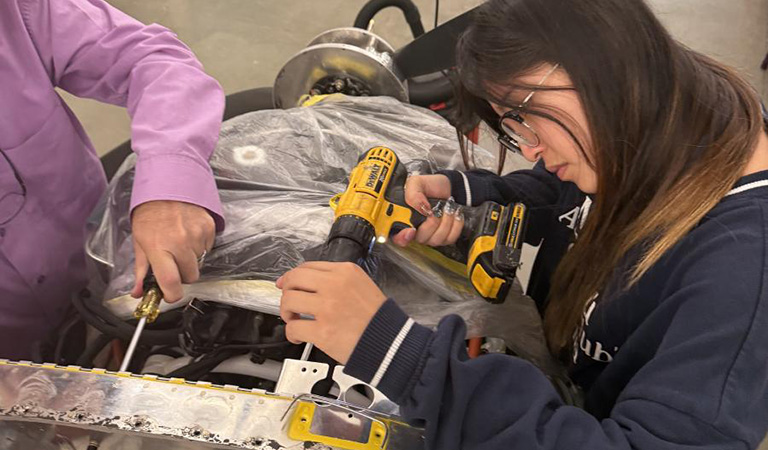
She also learned a lot about leadership from her experience as a plane proctor.
“Being put in charge of a situation where safety was really important for both the people working on the project and also the person who would eventually fly the plane, that was a big responsibility. I think I learned a lot about how to manage people in those situations, and how to take steps carefully, while also giving people the opportunity to try something new,” Naomi said.
Kavi Dey ’26 worked on the aircraft over a summer, balancing senior thesis research in physics with evening shifts in the makerspace working with other students on the plane.
Dey worked mostly on the cowling, an air-tight fiberglass cover in the front of the plane, and the avionics, the hardware inside the plane that measures altitude and speed and communicates with the engine.
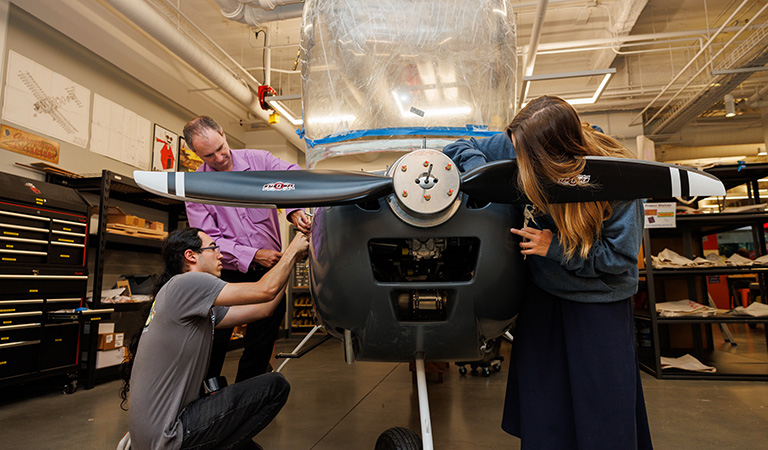
“I think it’s awesome that we got to take a pile of metal and turn it into a thing that actually flies in the air,” Dey said. “It was such a unique experience to get to actually build a plane, learn how to use all the tools, and also learn about the physics and the engineering behind how to make something that is strong and can lift itself and is safe to be in. And it was great to see the electrical side of the wiring, the pneumatics and all the different pieces come together. It was such a cool project.”
In all, over 100 members of the Harvey Mudd community—including students in E15, summer teams and visiting high school students—contributed approximately 4,000 hours of labor to complete the aircraft.
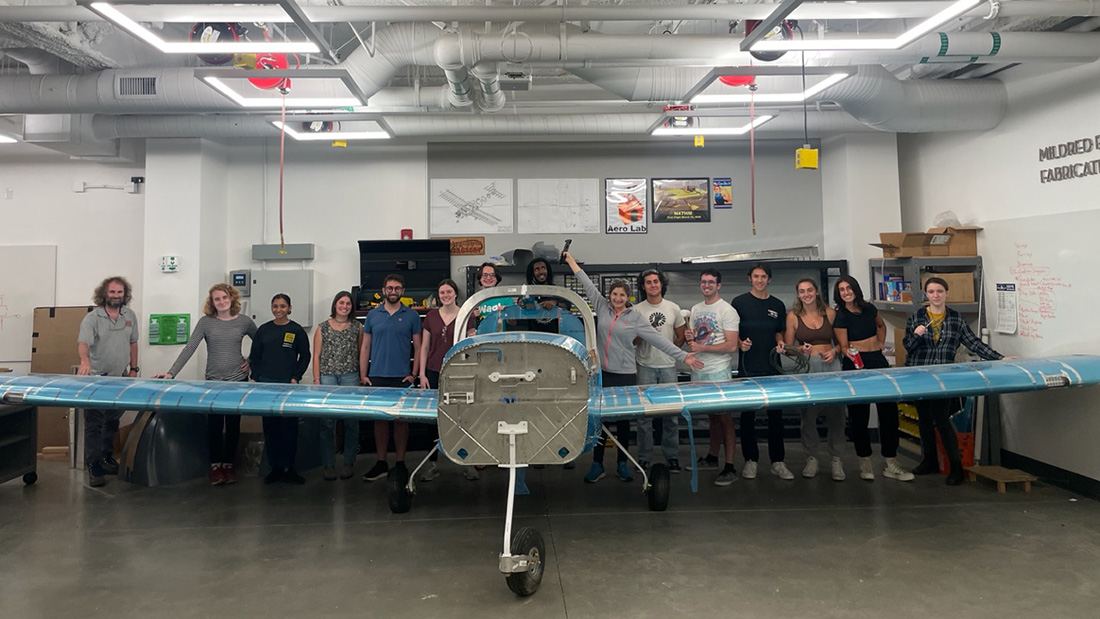
“Watching the students build the wings, the tail, the fuselage, then the finishing kit, mount the engine, fit the cowling and install the avionics—a large, complex system—it’s been really rewarding,” Harris said.
“One of the things I love about Harvey Mudd is that our students go out and build things,” he added.
The Vans RV-12iS will be the last plane constructed at the College for the foreseeable future, freeing up space and resources for more experiential learning projects including Formula 1 race cars, rockets and autonomous submarines.
Mudd Magazine