Harvey Mudd Students Named 2026–2027 Astronaut Scholars
July 1, 2026
Harvey Mudd College students Angela Milo ’28 and Joshua Ikehara ’27 have been selected by the Astronaut Scholarship Foundation (ASF) as 2026–2027 Astronaut Scholars. They join an elite cohort of undergraduates recognized for exceptional academic performance, research excellence and commitment to STEM fields.
The Astronaut Scholarship is among the most prestigious STEM scholarships in the U.S., offering up to $15,000 in funding. Scholars also receive professional development support, mentorship and the opportunity to present their work during ASF’s Innovators Week and Gala.
Angela Milo ’28
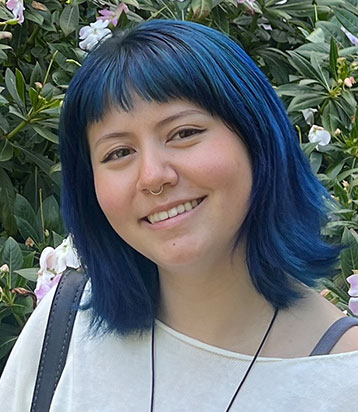
Milo, a chemistry major, has built experience across asymmetric catalysis, organometallic catalysis, polymer chemistry and green chemistry. Her research at Harvey Mudd contributed to identifying safer, greener alternatives to dichloromethane in teaching laboratories—work that led to the 2025 Journal of Chemical Education article “Alternatives to Dichloromethane for Teaching Laboratories,” co-authored with Lijinghan Chen, Kyle A. Grice and Donald A. Strauss Professor of Chemistry David A. Vosburg. The article addresses how to eliminate the use of the toxic, regulated solvent in undergraduate laboratory settings. This work connects to the College’s broader effort to redesign chemistry lab experiments around less hazardous materials and more sustainable practices.
Milo is a 2026 MIT Summer Research Program participant. Previously, she was a student researcher at Pomona College, a student researcher at Harvey Mudd College, a Leadership Alliance Summer Undergraduate Research Fellow at Princeton University and a 2024 American Chemical Society Scholar.
She serves as sustainability director on the Associated Students of Harvey Mudd College Executive Board, participates in Chemistry Academic Excellence and tutors chemistry and core curriculum courses.
After graduation, Milo plans to pursue a PhD in organic chemistry, with a focus on sustainable organic synthesis.
“I look forward to joining a talented network of current Astronaut Scholars and Astronaut Scholar alumni. I’m also looking forward to presenting my research at the Innovator’s Symposium and Gala in August and learn about the research that my peers are doing.”
Joshua Ikehara ’27
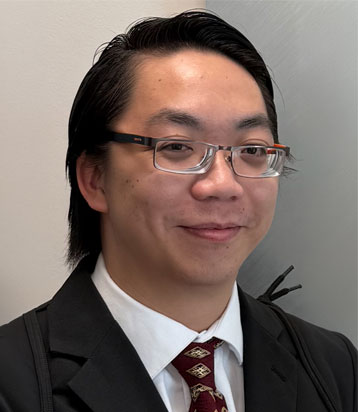
Ikehara, an engineering major with a focus in electrical engineering, conducts research in the Colm Healy Lab, where he investigates copper-imidazolate coordination polymers. Ikehara has synthesized new metal-based polymers and optimized monomer purification methods, with the goal of controlling thermal and electrical properties while developing more recyclable materials with plastic-like qualities. He has presented this work at the Southern California Conference for Undergraduate Research, and was also awarded a Science and Engineering Research Fellowship at Harvey Mudd.
Ikehara also collaborates with Sandia National Laboratories and Professor of Engineering Albert Dato to study the permittivity of ferroelectric nanoparticles suspended in silicone, with the aim of creating advanced dielectric composites for use in lighter-weight capacitors with enhanced energy storage and power conversion. Applications span space exploration, electric vehicles, solar power and broader electronic systems. The research team is in the process of submitting a paper for publication.
Additionally, Ikehara has researched and prototyped cephalopod-inspired soft robotics designed to minimize ecosystem impact and reduce oceanic microplastic waste.
On campus, Ikehara serves as a Core Scholars Tutor, an Engineering Teaching Assistant and an Experimental and Systems Engineering proctor, where he will take on a mentorship role for new student proctors this fall. He is also treasurer of Tau Beta Pi Engineering Honor Society, on the leadership team for Science Bus and a Harvey Mudd Summer Institute scholar.
Ikehara also founded and leads a Science Olympiad youth outreach STEM mentoring program where he and other 5C students mentor high school students in preparation for local, county, state and national Science Olympiad competitions. The mentoring program focuses on hosting hands-on lab events, guidance on building engineering devices and preparing mentees for advanced knowledge assessments.
About the Astronaut Scholarship Foundation
The ASF is a nonprofit organization established in 1984 by six surviving members of America’s original Mercury astronaut corps. The Astronaut Scholarship is the nation’s largest merit-based monetary award for science and engineering undergraduates. Harvey Mudd College is one of 41 partner institutions, and the only non-doctorate-granting institution among them.
Mudd Magazine