Harvey Mudd Biologist Danae Schulz Secures NSF Grant to Study Deadly Parasite
June 30, 2026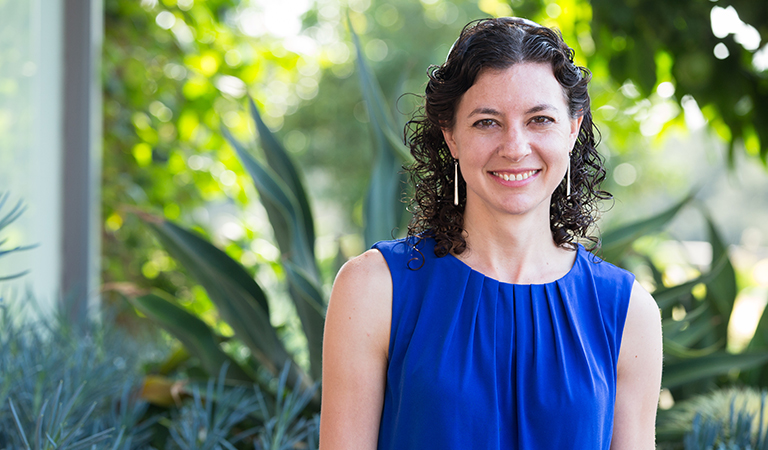
Harvey Mudd College Associate Professor of Biology Danae Schulz has been awarded a $573,378 grant from the National Science Foundation (NSF) to advance key molecular biology research while expanding hands-on laboratory and community outreach opportunities for students.
The three-year project, titled “RUI: Genetic mechanisms that regulate surface protein remodeling during life cycle transitions in the African trypanosome,” targets the molecular inner workings of Trypanosoma brucei—the parasite responsible for African sleeping sickness, a tropical disease transmitted by the tsetse fly that imposes a severe human and economic burden across Sub-Saharan Africa. Current medical treatments are limited and can be toxic. Schulz’s lab is looking to change that by studying how the parasite adapts to survive in different hosts.
When the parasite enters a mammal’s bloodstream, it constantly changes its “surface coat” (surface proteins) to outsmart and evade the host’s immune system. However, once it moves back into a tsetse fly, it switches to a single, unvarying coat.
“If we could understand that switch from the varying surface protein to the invariant surface protein at a molecular level,” says Schulz, “we might be able to force a switch to the invariant coat while the parasite is still in the mammalian host. That way, host antibodies would be effective, and the immune system could eliminate the parasite.”
The NSF grant builds on a discovery by the Schulz lab that mapped exactly where and when the protein Bdf3 binds to the parasite’s DNA during this lifecycle transition. The funding will allow researchers to investigate the precise genetic machinery—including histone acetylation (chemical modifications that alter gene expression) and candidate protein complexes—that recruit Bdf3 and control this vital switch.
Powered by Undergraduates
At Harvey Mudd, high-caliber research is driven by students. Over the last four years, HMC students generated the vital preliminary data required to secure this federal funding. Students have been co-authors on papers describing how Bdf3 might be pharmacologically inhibited and what Bdf3 might do in insect cells. “However, we don’t know what Bdf3 is doing once it binds the DNA, and we don’t know how it gets recruited,” says Schulz.
This emphasis on publication-track research is a staple of the Schulz lab. Recent publications from the lab featured eight student co-authors, and subsequent methodological papers included multiple HMC students and collaboration with Pomona College professor Jo Hardin.
Expanding STEM Pedagogy and Community Outreach
The grant will support four to six undergraduates each academic year and two students each summer for a 10-week intensive research period. Student researchers will have the opportunity to perform primary experiments, draft methods sections, design scientific figures and travel to regional and national conferences to present their data to professionals in the field.
A distinct element of the grant is its integration with the wider community, stretching from local high schools to regional health facilities.
- High School Summer Mentorship: The grant funds a four-week summer program for one high school student annually, giving them a look at a professional laboratory environment.
- Innovation Accelerator Lab: The funding will bolster HMC’s newly established Innovation Accelerator Lab for Emerging Health Technology, which supports faculty and student research fellows who bridge high-level research with community education. Schulz is collaborating with HMC faculty peers to deploy student and faculty fellows into local K–12 schools and skilled nursing facilities for annual science events. Current projects pair students with math professor Susan Martonosi to present on the dynamics of vaccine attitudes and disease outbreaks, and with engineering professor Nancy Lape to explore bioengineering concepts related to how drugs are absorbed through the skin.
By weaving together cutting-edge parasitology, undergraduate mentorship and local civic engagement, Schulz’s project embodies Harvey Mudd’s mission to cultivate technical excellence alongside a commitment to global impact.
Mudd Magazine