Pillar of Democracy
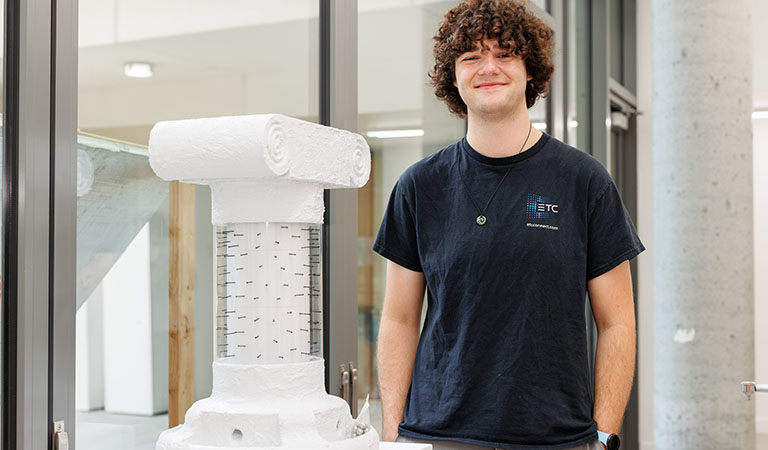
Pillar of Democracy (2026)
Benjamin Simpson
acrylic, wood, plastic, sculpt coat
Minnesotan physicist Ben Simpson (b. 2006) emphasizes the randomness, disconnect, and the flaws of democracy via his Kleroterion inspired art piece, the Pillar of Democracy. The column is a take on the classical phrase, “the pillars of democracy” to which the interactive sculpture, based off of an Ionic Greek Pillar, is intended to represent. Constructed from PLA plastic, sculpt coat, acrylic and metal, the sculpture feels grounded and hefty, while also being interactive and visual through the clear viewing surface. Results decided by the pillar are not completely random, yet the probability is not concrete, and not even fully defined by the artist, leaving room for the flaws in the democratic system to be brought forward into question.
Either solo or in a group of four, participants in democracy will determine a meaning for each of the four receptacles. This meaning could be playful, such as who wins the game, with each receptacle associated with an individual participating in the game. Or the meaning could be set to a range of choices, where each receptacle is a decision that is made for the participant. Once a meaning is assigned to each receptacle, one or all users will pour the marbles into the top of the pillar and watch them randomly scatter throughout the plinko pegs into each receptacle. The receptacle with the most marbles is the “winner” and represents the voters settling on their candidate or issue of choice.
While the participants in this game of democracy get to choose the value of the results, and the initial input, they have absolutely no control over the internal systems. This relates to an inherent disconnect that voters often feel voting for politicians that might not properly represent them. They have to look in through the viewing window and decide for themselves whether the system is random and fair, or rigged in favor of a specific receptacle. In the end this pillar of democracy raises more questions than it answers, such being: Even if we could see all the workings behind our democratic system, would that make it fair?