Harvey Mudd Students Win Second Place at MIT Climate and Energy Hackathon
January 6, 2026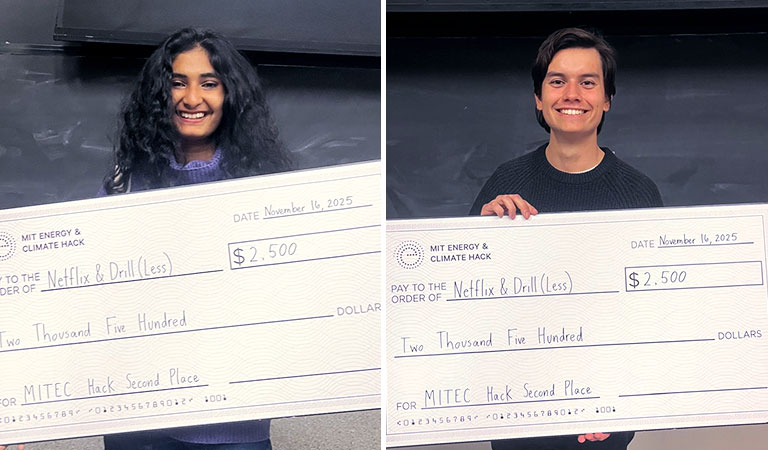
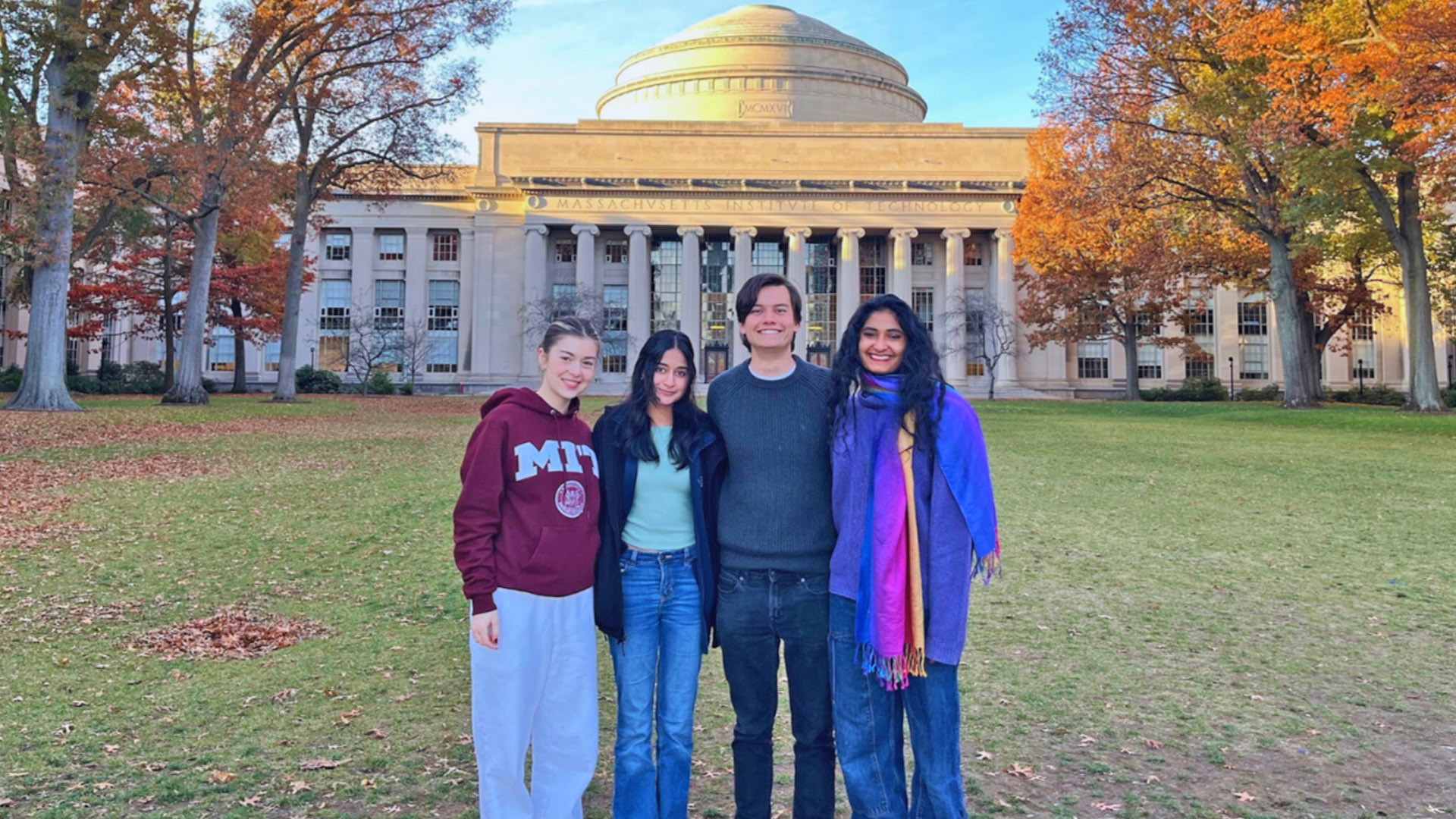
Harvey Mudd College students Lucas Sullivan ’27 and Zaara Bhatia ’27 earned second place overall at the 11th annual Climate and Energy Hackathon, hosted by the MIT Energy and Climate Club. The three-day competition brought together more than 200 students from MIT, Harvard, Stanford, and other leading institutions to develop innovative solutions to global climate and energy challenges.
Sullivan and Bhatia were part of a four-person team that tackled a challenge from Array Technologies: creating a tool to weigh tradeoffs between steel cost and carbon footprint across global supply chains and consider purchasing methods. Their solution incorporated climate-adjusted pricing for carbon dioxide, sulfur dioxide and freshwater use for large steel mills within top steel-producing countries, along with modeling for various steel and steel derivatives purchasing strategies.
Bhatia, a physics and computer science major (political science concentration), said the team approached the event eager to contribute to meaningful climate solutions. Although new to hackathons, she conducted extensive preparation, researching industrial decarbonization and meeting with professors for insight. She and Sullivan, a computer science-math and economics double major, formed a team with students from MIT and Harvard, combining strengths in research, software development, and finance.
“We were really happy with our team’s variety of strengths,” said Bhatia, who enjoys research. “Our teams’ engineering and software experience helped us move quickly. And Lucas’s economics background was crucial to coming up with our idea. His climate economics course with Dede Long, assistant professor of economics at Harvey Mudd, informed my contribution: researching ways to price the social costs of environmental damage.”
“Lucas shared that they estimated carbon and sulfur dioxide pricing using models we discussed in class—and even used a method from one of my assigned readings,” Long said. “Their success demonstrates what makes Mudd special: when a liberal arts education is deeply intertwined with rigorous STEM training, students are prepared to take on the world’s most complex problems.”
The team worked through the weekend, culminating in an all-night coding session for Bhatia and Sullivan. They presented their final product to Array Technologies’ judges on the final morning, and to their surprise, advanced to the semifinals and ultimately earned second place overall.
Reflecting on the experience, Bhatia said, “The sponsors from Array Technologies were incredibly supportive and gave us valuable guidance. Our solution stood out because it met the sponsor’s needs and approached the problem differently than other teams. I loved the experience and learned so much.”
Sullivan and Bhatia are active members of the Harvey Mudd community, pursuing research and leadership roles across campus.
Mudd Magazine