Ogba Research Group Showcases Computational Innovation at MERCURY
August 30, 2025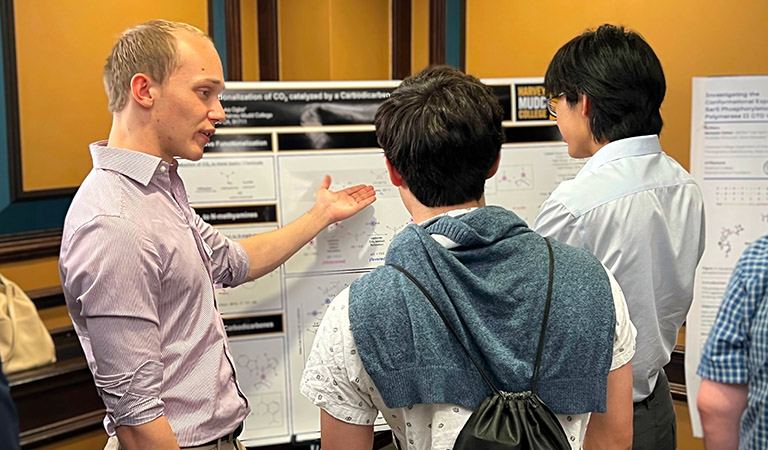
This past summer, four students from the Ogba Research Group at Harvey Mudd College traveled to the 2025 MERCURY Conference, a premier national venue for undergraduate computational chemistry, to present their latest findings. These students demonstrated how high-performance computing and data science can unlock solutions to some of chemistry’s most complex challenges.
Aresema Ata ’28 and Max Schernikau ’27 presented cutting-edge work on sustainable catalysis, with Aresema exploring the “Thermal stability of carbones in the presence of carbon dioxide” and Max detailing the “Reductive functionalization of carbon dioxide catalyzed by a carbodicarbene.” Their combined efforts shed light on how novel carbon-based catalysts can be used to transform greenhouse gases into useful chemical feedstocks.
Nora Nickolov ’28 showcased their research on “Structure-activity relationships of dioxido molybdenum(VI) complexes for deoxydehydration reactions,” offering critical insights into designing earth-abundant catalysts for converting biomass into renewable fuels. Meanwhile, Zaan Saeed ’28 highlighted the group’s expansion into artificial intelligence with his poster, “Predicting peptide cyclization yields using a machine learning framework,” demonstrating how modern algorithms can accelerate the discovery of new therapeutic drugs.
The strong showing by the Ogba group at MERCURY underscores Harvey Mudd’s leadership in the computational sciences, where students are not just learning theory but actively defining the future of chemical research.
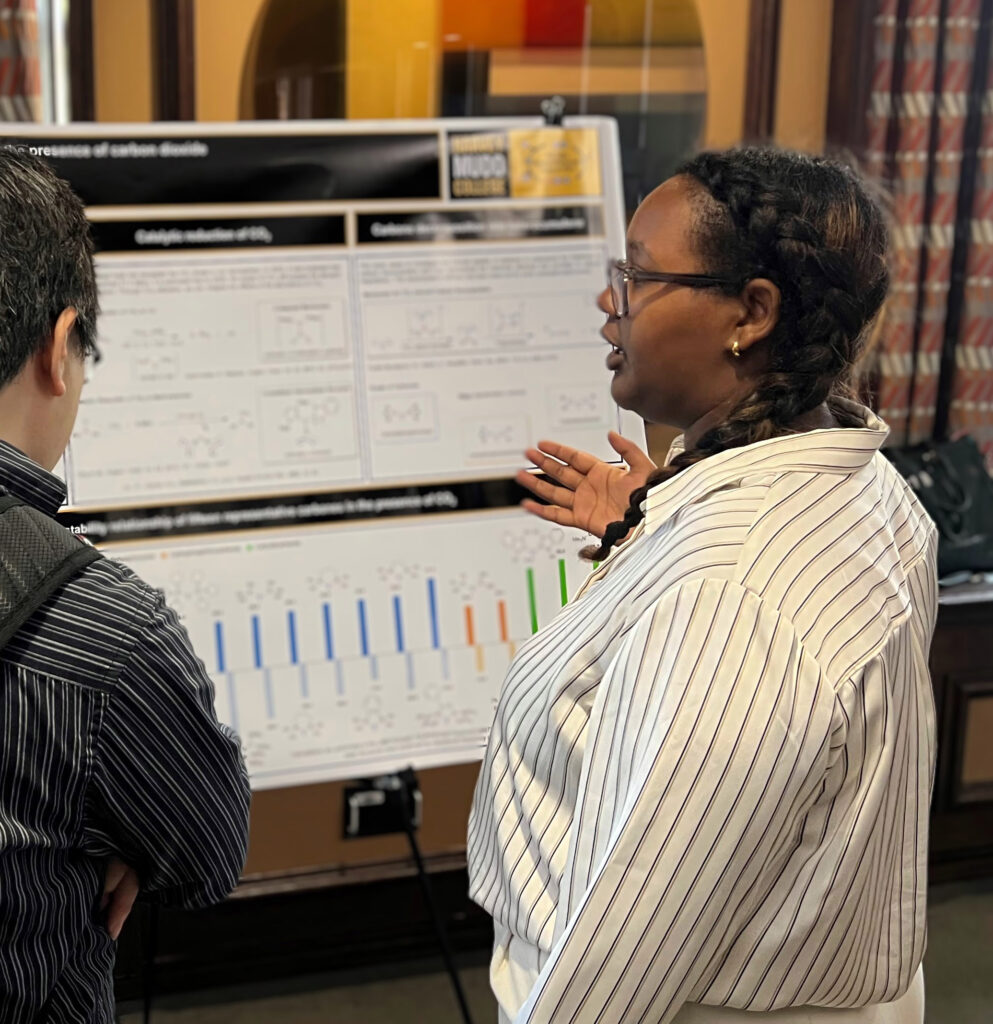
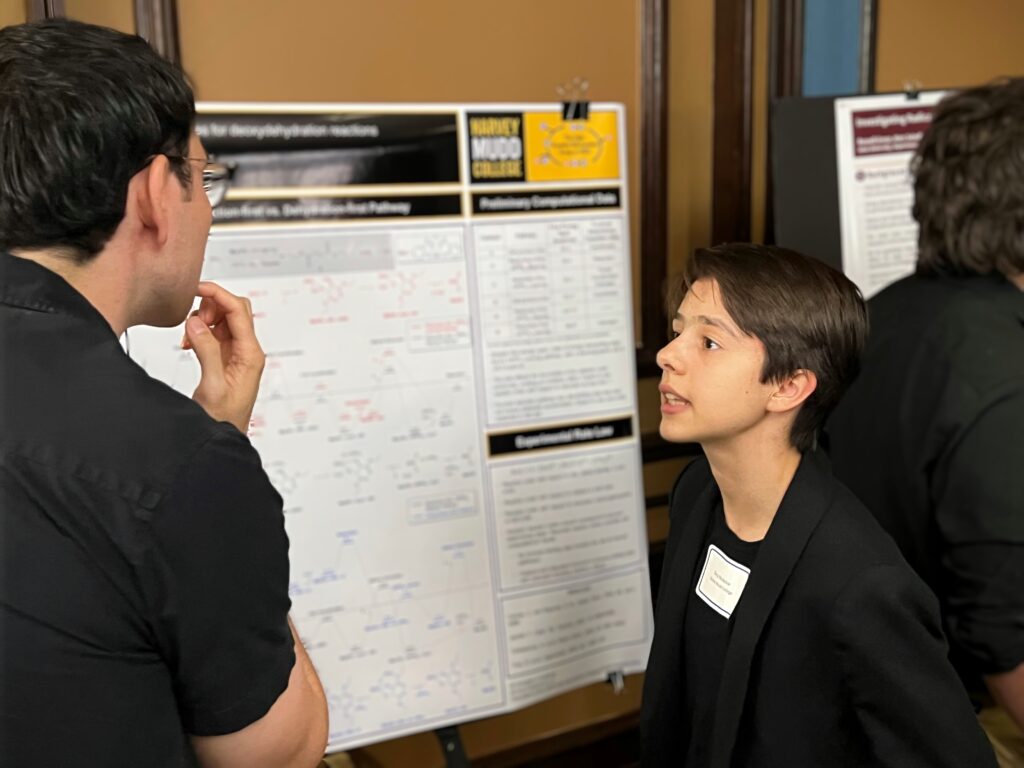
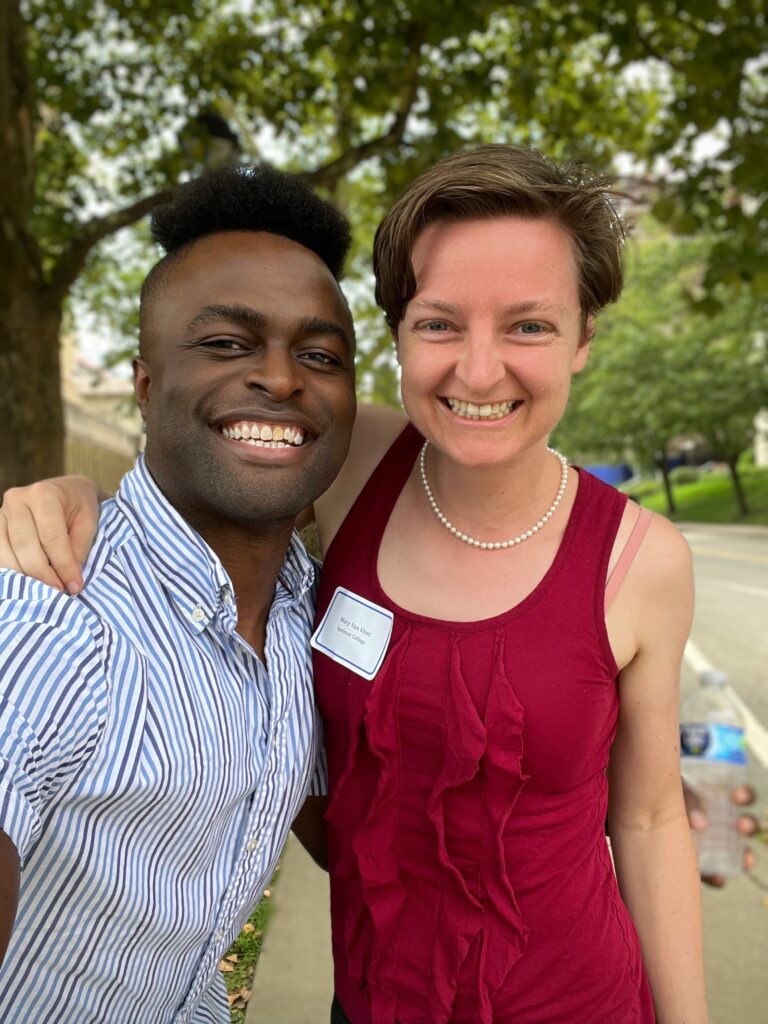
Photos, from left, Aresema Ata ’28, Nora Nickolov ’28, and Professor Maduka Ogba with Mary Van Vleet ’12.
Mudd Magazine