Join the M3 Mentoring Program: Supporting Mudders, Strengthening Community
August 8, 2025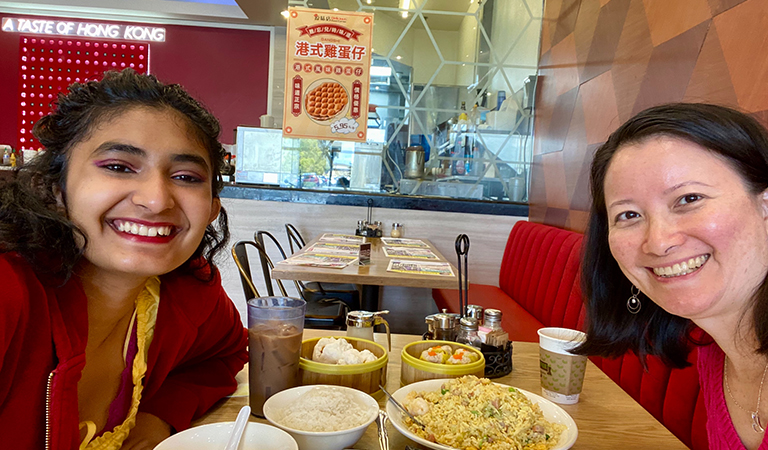
At Harvey Mudd College, preparing students to lead in STEM for a Better World means more than academic excellence—it’s about fostering meaningful human connections that support growth, belonging and resilience. The Mudders Mentoring Mudders (M3) program reflects this commitment by connecting students with faculty, staff and alumni who can offer encouragement, guidance and perspective throughout their Mudd journey.
Launched in 2011, the M3 program was designed to provide personalized support for sophomores, a pivotal and often challenging time. The program is rooted in the College’s values of inclusive excellence and community well-being, offering students trusted relationships that help them thrive at Mudd and beyond. This fall, the Office of Institutional Diversity will launch a new cohort of mentors and mentees, continuing this tradition of mutual learning and support.
Nita Kansara, assistant dean for Institutional Diversity and International Students and Scholars, has mentored two students. “Getting to know the students, learning about the college experience through their eyes and having a better understanding of what it takes to be at Mudd has been rewarding,” she says. “I enjoy seeing students at different phases of their Mudd journey, from sophomore to senior, and how they have grown.”
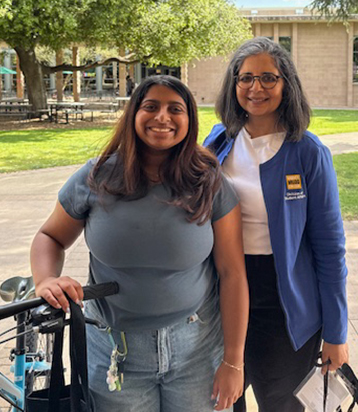
One of Kansara’s mentees, Ayushi Kashyap, shares her experience. “Having a mentor I can connect with, especially someone who shares my culture, has made a big difference. It’s helped the school year feel less monotonous and less isolating. Knowing that I can reach out and there will be someone there to help me talk through things makes it a little lighter,” she says.
M3 mentors and mentees connect in ways both casual and meaningful—over meals, coffee, or shared books and ideas. “It really depends on the mentee,” says Darryl Yong ’96, McGregor-Girand Chair in STEM Equity Innovation and Research and Professor of Mathematics. Yong co-founded the M3 program and continues to mentor students. “I still chat with some folks, even post-graduation,” he adds. “Being able to learn together with a mentee is one of the most wonderful parts of my job.”
The mentoring experience supports transformational learning for Mudd students, going beyond academics to develop interpersonal and leadership skills. Yong says, “I get to dive much more deeply into what’s happening in a person’s life beyond their mathematical work in my class. I see mentoring as a bi-directional relationship; we’re both learning.”
“It’s not just about academics or figuring out what I want to do with life,” says Kashyap. “It’s one of the few spaces where conversations can be about school, life, identity or anything. That openness makes it feel really genuine and like I’m talking to a friend casually.”
For Patricia Wang, student accounts manager and mentor since 2012, the program reinforces the College’s emphasis on holistic student support. “The most rewarding part of being a mentor has been the opportunity to connect on a personal level and build meaningful relationships. It’s a privilege to support students throughout their time here and witness their growth both personally and professionally.”
Wang encourages more staff to consider mentoring. “You don’t need to be a faculty member to make an impact. Staff bring a unique wealth of knowledge and life experience. Often, what students need most is to know someone here genuinely cares about them and their success.”
Kashyap agrees. “You don’t need to have all the answers. Just showing up and being real can mean a lot. Sometimes it helps to just be there to talk to your mentee; there is really no need to always have a goal of solving some problem.”
As Harvey Mudd continues its work to provide an inclusive and supportive learning environment, programs like M3 are essential to cultivating the kind of compassionate leaders who will shape a better world through STEM.
Email oid@g.hmc.edu if you’d like to become a mentor in the next M3 cohort.
Mudd Magazine