Sarah Kavassalis Receives Seaver Institute’s Support for Native Plant and Urban Air Quality Research
March 1, 2026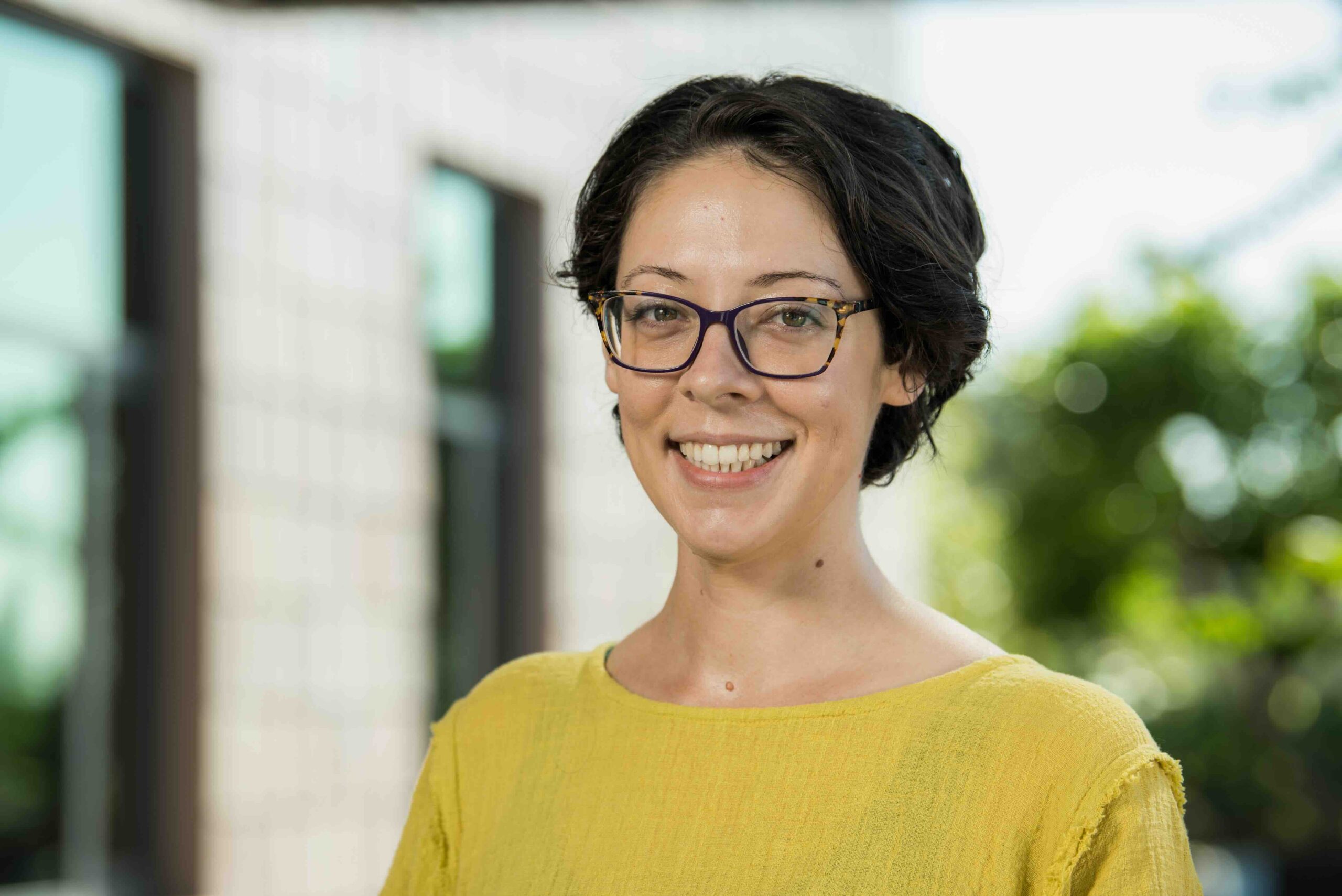
Harvey Mudd College Professor of Climate and Chemistry, Sarah Kavassalis, was awarded a three-year grant from The Seaver Institute to support research on how emissions from native Southern California vegetation interact with urban air pollution. The award provides $70,000 per year to support the project, Understanding Biogenic VOC Emissions and Air Quality Impacts in Los Angeles’s Coastal Sage Scrub Ecosystem.
Kavassalis and the research team focus on solving an enduring challenge: Despite decades of progress to improve air quality, ozone pollution remains a persistent health risk to Southern Californians. They are examining how volatile organic compounds (VOCs) released by native plants, particularly California coastal sage scrub species, interact with nitrogen oxide pollution from transportation and industrial sources to influence ozone formation. The Los Angeles region was once covered by coastal sage scrub, but now it exists primarily in fragmented urban and coastal patches. These native ecosystems are critical for maintaining biodiversity and strengthening climate resilience.
Some native plants can emit highly reactive compounds that may accelerate ozone formation under certain urban conditions, especially during extreme heat. The team aims to identify when natural plant emissions do not meaningfully influence air quality, helping support restoration and urban greening efforts that protect both ecosystem health and community air quality. Their work could help reshape how native vegetation is incorporated into urban landscapes and may ensure that restoration and greening efforts deliver climate, water and biodiversity benefits to support healthier air for communities across Southern California.
The research connects atmospheric chemistry, plant ecology and policy, which can offer interdisciplinary opportunities that can exist even beyond the grant’s continuance. Field measurements will be conducted at the Bernard Field Station in Claremont, which hosts the only AmeriFlux tower in Los Angeles County. This tower, referred to as US-BFS, measures carbon and water exchange over the coastal sage scrub habitat. Laboratory analysis will be paired with ecosystem-scale measurements to build a more complete picture of how plant emissions respond to heat and droughts along with other common environmental drivers.
Kavassalis and the research team aim to identify distinct emission patterns among individual plants during the project period, quantify how these emissions affect the surrounding atmosphere and develop a public archive of coastal sage scrub VOC emissions for use in regional and state air quality modeling. A project goal is to produce easily digestible, culturally valued planting guidance to help cities and decision-makers select lower-emission plant variants while maintaining biodiversity and saving water.
The project provides hands-on experience in environmental chemistry, ecology and policy-relevant science, with undergraduate training incorporated throughout. The work is designed to support decision-making agencies, such as the California Air Resources Board and the South Coast Air Quality Management District, while contributing to broader efforts to understand urban air quality in a changing climate.
Mudd Magazine