CS Colloquium– “AI Agents, Identity and the New New Future of Work,” Denae Ford Robinson
September 19, 2025 11 a.m.–12:15 p.m.
 Add to Calendar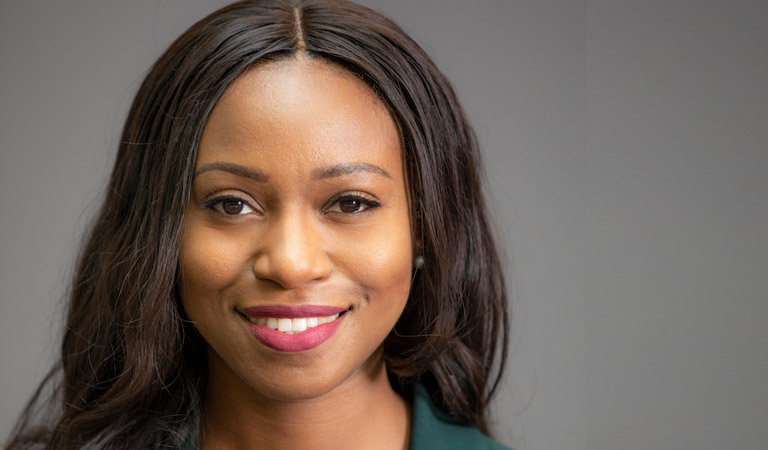
Location
Shanahan Center, Auditorium
320 E. Foothill Blvd.
Claremont, CA 91711
Contact
Morgan McArdle
mmcardle@g.hmc.edu
909.607.0299
Details
"Extending Ourselves: AI Agents, Identity, and the New New Future of Work"
The rise of AI agents is forcing us to confront new questions about identity, trust and collaboration in the workplace. These systems don’t just change how tasks get done—they shift how people see themselves and each other at work. Denae Ford Robinson shares insights from recent research on AI-powered agents. First, she’ll discuss how these systems can extend our abilities and reshape the relationships we build at work. She'll highlight early approaches for aligning agents with our “intended” selves. Then, she'll examine how lessons from our interactions with AI can be carried offline to strengthen in-person collaboration and develop new strategies for self-advocacy in the workplace. She'll reflect on the challenges and opportunities of this emerging space and what it reveals about the “new new” future of work—and the ways AI may extend, but also reshape, who we are in it.
Speaker
Denae Ford Robinson is a principal researcher at Microsoft Research in the Inclusive Futures group and an affiliate assistant professor in the Human Centered Design and Engineering Department at the University of Washington. Her research sits at the intersection of Human-Computer Interaction and Software Engineering, with a focus on dismantling social and cognitive barriers in online socio-technical ecosystems and empowering marginalized groups in software development communities.
She is best known for her work on just-in-time mentorship, which enables more welcoming engagement in collaborative Q-and-A for online programming communities and open-source projects. More recently, her research investigates how knowledge workers adopt AI-powered tools, with an emphasis on building trust, understanding psychological impacts, and designing strategies for well-being in AI-mediated workplaces. She is also exploring mimetic agents—AI systems that extend human behaviors and communication patterns—and their effects on collaboration, identity, and knowledge work.
Ford Robinson earned her B.S., M.S., and PhD in computer science from North Carolina State University, with a graduate minor in cognitive science. Her work has been recognized by the National GEM Consortium, National Science Foundation, Microsoft Research and the White House Office of Science and Technology Policy. She has also been honored as a BlackComputeHER Rising Star and named a Young Research Fellow by the Heidelberg Laureate Forum. Beyond her research, she is committed to advancing equity and mentorship in computing. She has organized mentoring and inclusion initiatives at leading ACM conferences and co-founded the Black Researchers @ Microsoft Research group, which she continues to co-lead. She also remains active in the Women Researchers at Microsoft group, mentoring emerging scholars as they navigate their post-PhD careers.